Fat Transfer Breast Augmentation Recovery: What to Expect Week by Week
Updated May 2026
Patients researching fat transfer breast augmentation in Beverly Hills can use this guide as background and then review our comprehensive surgical page for candidacy, safety, and consultation planning.
Understanding Fat Transfer Recovery
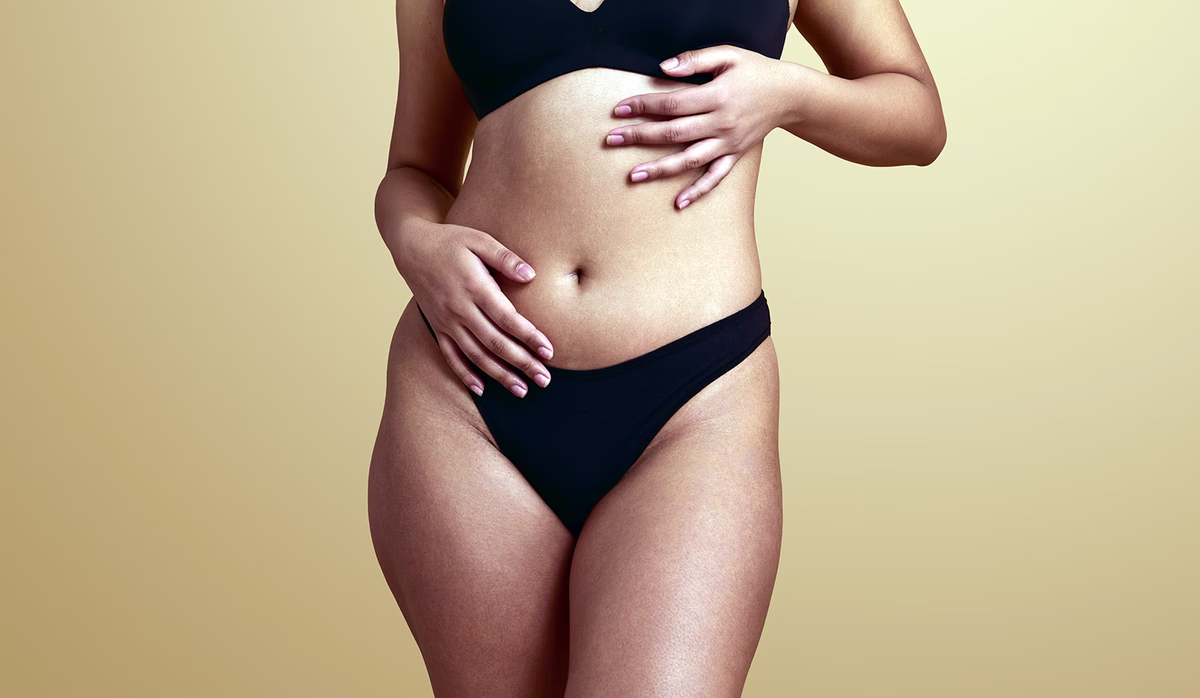
Recovery from fat transfer breast augmentation is different from implant-based breast augmentation in one key way: there are two healing areas to manage. The breasts, where fat was injected, and the donor sites, where liposuction was performed. Most patients find the donor site discomfort — often the abdomen or flanks — to be the more noticeable of the two in the first week.
At Aura Aesthetica, Dr. Jonathan Kanevsky provides every patient with detailed post-operative instructions tailored to their specific procedure. The timeline below reflects the typical recovery experience for his fat transfer breast augmentation patients.
Week 1: Rest and Initial Healing
The first week is the most physically demanding. You will experience swelling, bruising, and soreness at both the breast and donor sites. A compression garment worn over the liposuction areas is required during this period to control swelling and support the healing tissue. Most patients describe the discomfort as manageable with prescribed pain medication and over-the-counter anti-inflammatories.
Plan to take at least five to seven days off work. Light walking is encouraged from day two onward to promote circulation and reduce the risk of blood clots. Avoid anything that raises your heart rate significantly.
Weeks 2 and 3: Returning to Light Activity
Bruising begins to fade and swelling starts to gradually improve through weeks two and three. Most patients feel comfortable returning to desk work and light daily activity by day seven to ten. The compression garment continues to be worn during this phase.
Avoid sleeping directly on your stomach during this period, as pressure on the breasts can disrupt the newly grafted fat before it has established blood supply. Sleeping on your back is strongly recommended for the first three to four weeks.
Weeks 4 through 6: Resuming Normal Activity
By week four, most patients have returned to their regular routines. Light exercise such as walking and yoga is generally permitted. More strenuous activity — running, weight training, high-intensity classes — is typically cleared at the six-week mark following a post-operative evaluation with Dr. Kanevsky.
Months 2 through 6: Final Results Take Shape
This is the phase that requires the most patience. Fat reabsorption occurs during the first several months as the body processes the transferred cells. Some swelling in the breasts may persist through month three. Final volume and shape become visible around the three to six month mark, once the surviving fat has stabilized and integrated into the surrounding tissue.
It is normal to notice some asymmetry or variation in the early months — this typically resolves as swelling subsides. Contact the practice if you notice any unusual firmness, significant asymmetry, or other concerns during recovery.
Tips to Support Fat Survival
Certain behaviors in the weeks following surgery directly affect how much of the transferred fat survives long-term. Avoid smoking entirely, as it significantly impairs blood flow and fat cell survival. Maintain a stable weight — significant weight loss after surgery will reduce breast volume since the fat cells behave like natural fat. Avoid direct pressure on the breasts for the first month. Stay well-hydrated and eat a nutrient-rich diet to support tissue healing.
Keep Reading
Start with our complete guide to fat transfer breast augmentation or review whether you are a good candidate. When you are ready to take the next step, learn why patients choose Dr. Kanevsky as their fat transfer breast surgeon in Los Angeles.
Ready to Learn More?
Dr. Kanevsky is available for consultations at Aura Aesthetica in Beverly Hills. Call 310-773-4596 or book online to discuss whether fat transfer breast augmentation is right for you.
Medically reviewed content
Reviewed by Dr. Jonathan Kanevsky
This educational article was reviewed by Dr. Jonathan Kanevsky, a board-certified plastic surgeon in Beverly Hills specializing in fat transfer procedures, body contouring, breast surgery, and recovery-focused aesthetic planning.
Last updated: May 2026
Related articles
Continue reading: Fat Transfer Breast Augmentation
2026-04-29
Fat Transfer Breast Augmentation Guide 2026 | Beverly Hills
Complete Beverly Hills guide to fat transfer breast augmentation: candidacy, cost, recovery, risks, results, fat survival, and how to choose a specialist.

2026-04-22
What Is Fat Transfer Breast Augmentation? Patient Education Guide
What is fat transfer breast augmentation? Your own fat is harvested, purified, and injected to grow breast volume naturally — no implants. See the basics here.

2026-04-22
Fat Transfer vs Breast Implants: Which Is Right for You?
Fat transfer vs breast implants — which is right for you? See how size, feel, recovery, and long-term risk compare from an implant-free surgical specialist.

2026-04-22
How Long Do Fat Transfer Breast Augmentation Results Last?
How long do fat transfer breast augmentation results last? See why surviving fat is permanent, what affects it, and how the 60-70% retention rate is calculated.
Related reading
Explore next steps for breast fat grafting
- fat transfer breast augmentation Beverly Hills
- breast fat grafting Beverly Hills
- fat grafting breast augmentation
- natural breast augmentation
- breast augmentation with fat transfer
- Beverly Hills cost planning
- Recovery milestones after fat transfer to the breasts
Ready for individualized recommendations? Request your consultation for a personalized treatment plan.