Gynecomastia Surgery in Beverly Hills: A Complete Guide for Men Considering Treatment
Updated May 2026

Why Gynecomastia Surgery Is One of the Most Underdiscussed Procedures
Gynecomastia — the development of excess breast tissue in men — affects between 40 and 60 percent of adult males at some point in their lives. Despite this prevalence, it remains one of the most underdiscussed conditions in aesthetic medicine. Men experiencing gynecomastia often suffer privately for years before seeking treatment, sometimes avoiding swimming, beaches, dating situations, or other contexts where the chest is visible. The psychological impact is significant, and the condition rarely resolves on its own once it has been present for more than a year or two.
Beverly Hills has emerged as one of the most established markets in the country for gynecomastia surgery specifically. The combination of high-volume specialists, sophisticated patient base, and discreet professional environment has produced a market where men can access excellent surgical work without compromising their privacy. At Aura Aesthetica, Dr. Jonathan Kanevsky performs gynecomastia surgery as part of a broader breast aesthetic specialty, applying the same technical principles that distinguish his work in other procedures.
This guide is designed for men considering gynecomastia treatment for the first time. It covers what the condition actually is, how it is treated, who is a candidate, what the surgery involves, and what to expect from recovery and results. If you have been considering this procedure but have not had a substantive conversation about it, this guide is the starting point.
What Gynecomastia Actually Is
Gynecomastia is the development of glandular breast tissue in men, sometimes accompanied by excess fat in the chest area. It is fundamentally different from simple chest fat (which can usually be addressed with weight loss or liposuction alone) because gynecomastia involves actual breast tissue — the same type of tissue that develops in women's breasts during puberty. This tissue does not respond to diet and exercise. Men who have tried to lose chest fat through training and nutrition without success are usually dealing with gynecomastia rather than simple adipose tissue.
The condition can develop at any age but most commonly appears during puberty (sometimes resolving spontaneously over a year or two), in middle age as testosterone levels decline relative to estrogen, or in older men due to medications, hormonal changes, or weight gain. Some men develop gynecomastia in response to specific medications including certain heart medications, anti-anxiety medications, anabolic steroids, and substances like marijuana that affect hormonal balance. In a smaller number of cases, gynecomastia signals an underlying medical condition that should be evaluated by a primary care physician before surgical treatment.
The visible result is breast tissue that produces a feminine appearance to the chest — often described by patients as "puffy nipples" in milder cases or as "man boobs" in more pronounced cases. The condition can affect one or both sides, often asymmetrically, and the tissue is usually firm and palpable rather than soft like fat alone.
Who Is a Good Candidate for Surgery
Gynecomastia surgery is generally appropriate for men whose breast tissue has been present for more than a year, who have been at a stable weight, and whose general health is good enough to tolerate elective surgery. Patients should not be actively using substances that may have caused the condition, as the underlying cause needs to be addressed before surgery to prevent recurrence. The surgery is usually delayed in adolescents until growth is complete and the natural hormonal balance has stabilized.
Patients who are significantly overweight may be advised to lose weight before considering surgery. The reason is twofold: substantial weight loss often reduces the apparent size of the breast tissue, sometimes to the point where surgery is no longer necessary, and operating on a patient at their stable adult weight produces better long-term aesthetic outcomes. Patients who have substantial weight loss after surgery may end up with loose chest skin that requires additional treatment.
Realistic expectations are an essential part of candidacy. The surgery produces a flatter, more masculine chest contour, but it does not produce a defined or muscular chest. Men who expect surgery to give them an athletic-looking chest without exercise are usually disappointed. The right expectation is a normal, masculine chest that allows the patient to feel comfortable shirtless and that reveals whatever underlying chest definition the patient has built or will build through training.
How the Surgery Actually Works
Gynecomastia surgery is typically performed as an outpatient procedure under general anesthesia or deep sedation, lasting one to three hours depending on the extent of tissue to be removed. The procedure involves two main components, often combined in a single operation: removal of the glandular breast tissue through a small incision, usually placed at the lower edge of the areola where it heals nearly invisibly, and removal of any excess fat in the chest area through liposuction.
The glandular component is the more technically demanding part of the procedure. The breast tissue is firmly attached to the underlying chest wall and to the surrounding skin, and it must be removed while preserving the natural contour of the chest. Too aggressive a removal produces a sunken or "crater" deformity at the site of the tissue removal. Too conservative a removal leaves residual tissue that produces a recurrence of the original puffy appearance. The surgeon's judgment about exactly how much tissue to remove and how to taper the edges of the removal determines whether the final chest contour looks natural or surgical.
The liposuction component addresses any remaining adipose tissue and helps blend the contours between the central chest area and the surrounding chest wall. In some cases, particularly mild gynecomastia or cases that are predominantly fatty rather than glandular, liposuction alone may be sufficient. In most cases, the combined approach produces better results than either component alone.
Different Severity Levels Require Different Approaches
Gynecomastia exists on a spectrum, and the surgical approach varies meaningfully across the severity range. Mild gynecomastia, sometimes called Grade 1 or Grade 2, involves limited tissue and minimal skin laxity. These cases can typically be addressed through small incisions and tissue removal without any need for skin excision. The results are excellent and the scarring is minimal.
Moderate gynecomastia involves more substantial tissue and some skin laxity, but the skin will retract adequately after tissue removal. These cases are still typically addressed through periareolar incisions without skin excision, though the surgical work is more extensive. Recovery takes longer and the results take more time to mature, but most patients achieve excellent outcomes.
Severe gynecomastia or gynecomastia in significantly overweight patients sometimes requires more substantial skin excision in addition to tissue removal. These cases produce more scarring but address the full extent of the deformity. For patients with very pronounced gynecomastia, the additional scarring is usually a worthwhile trade-off for the dramatic improvement in chest contour.
An experienced surgeon evaluates each patient's specific severity grade and tissue characteristics to determine the right surgical plan. The same surgical approach applied to every patient regardless of severity produces poor results in cases that fall outside the approach's appropriate range.
Recovery and Returning to Normal Activity
Recovery from gynecomastia surgery is typically faster than from many breast procedures. Most patients return to desk work within five to seven days and resume light exercise at three to four weeks. The chest is bruised and swollen for the first two weeks, with gradual improvement over the following month. A compression garment is worn for four to six weeks to support the healing tissue and to optimize the final contour.
Strenuous chest exercises — pushups, bench press, weighted dips — are typically restricted for six to eight weeks to allow the deeper tissue to heal completely before exposure to high tension. Most patients can return to general weight training and cardio at four weeks, with chest-specific exercises added back in stages over the following month. Patients who follow these activity restrictions carefully tend to have better long-term results than those who return to chest training too quickly.
The visible swelling resolves over three to four months, and the final chest contour is established by six months. Scars from periareolar incisions fade over twelve to eighteen months and are typically very difficult to see at the final stage. Patients are usually surprised by how minimal the scarring becomes once it has fully matured.
The Discretion Factor in Beverly Hills
One of the practical reasons men choose Beverly Hills for gynecomastia surgery specifically is the discretion of the consultation and surgical experience. The Beverly Hills surgical environment is built around patient privacy. Practices typically have private entrances, scheduled consultations that minimize waiting room exposure, and protocols designed to protect the confidentiality of the patient experience. For many men, this discretion is a meaningful factor in choosing where to have the procedure performed.
The surgical experience itself is also calibrated to a sophisticated patient base. Beverly Hills surgeons performing gynecomastia surgery are typically working in fully accredited surgical facilities with experienced anesthesia teams, comfortable recovery accommodations, and the kind of patient care infrastructure that distinguishes high-end practices from generalist offices. The combined effect is a surgical experience that feels more like a medical visit than a stigmatized procedure.
Cost Considerations
Gynecomastia surgery in Beverly Hills typically ranges from $7,500 to $15,000, depending on the severity of the case, the surgical approach required, the surgeon's level of specialization, and the facility. The cost includes anesthesia, facility fees, the surgeon's fee, post-operative garments, and standard follow-up care. Cases requiring more extensive tissue removal or skin excision fall toward the upper end of the range.
Insurance coverage for gynecomastia surgery varies. In some cases — particularly when the condition is causing physical symptoms like pain or skin irritation, or when it is severe enough to be considered a medical rather than purely cosmetic problem — partial insurance coverage may be available. Patients should not count on insurance covering the procedure but should investigate their specific situation if the condition is severe or symptomatic.
How to Choose a Surgeon
The most important factor in choosing a surgeon for gynecomastia is genuine specialization in this specific procedure. Many plastic surgeons offer gynecomastia surgery as one of dozens of services. A smaller number perform it regularly enough to have refined judgment about tissue removal extent, contour preservation, and the integration of glandular and fatty components. The questions that distinguish specialists from generalists are similar to those for any breast procedure: how many cases do they perform per year, what is their revision rate, what does their typical patient experience look like, and how do they approach the spectrum of severity?
Patient testimonials and before-and-after photos can provide some signal, but the limitations are real — most surgeons show their best results, and gynecomastia photos can be especially difficult to evaluate due to lighting, posture, and angle differences. The substantive consultation conversation, where the surgeon explains their specific approach and answers detailed questions, is usually a more reliable indicator of what to expect.
Dr. Kanevsky's approach to gynecomastia surgery applies the same technical principles that guide his other breast procedures: careful patient selection, refined judgment about how much tissue to remove and where, attention to long-term contour rather than just immediate post-operative appearance, and an honest conversation with patients about realistic expectations. For more on this approach generally, see our guide to choosing a Beverly Hills breast surgeon.
What to Do Next
If you are considering gynecomastia surgery, the most useful first step is to request an appointment with a surgeon who specializes specifically in this procedure. The consultation should cover your specific case — the severity grade, the tissue composition, your overall health and any medications that may have contributed to the condition — along with a clear discussion of the surgical approach that would work best for your case and what realistic results would look like. You should leave the consultation with a clear understanding of whether you are a good candidate, what the procedure would involve, and what the total investment of time and cost would be.
For men who have been living with gynecomastia for years, the consultation itself is often a transformative experience. Many patients describe it as the first time they have had a substantive conversation about a condition they have been quietly self-conscious about for a long time. The right surgeon makes this conversation feel professional and matter-of-fact, treating gynecomastia as the common medical condition it is rather than as something embarrassing.
Keep Reading
Learn more about other breast and chest procedures at Aura Aesthetica in our guide to Beverly Hills breast surgery, or explore the practice's overall approach to aesthetic surgery in our surgeon selection guide.
Medically reviewed content
Reviewed by Dr. Jonathan Kanevsky
This educational article was reviewed by Dr. Jonathan Kanevsky, a board-certified plastic surgeon in Beverly Hills specializing in fat transfer procedures, body contouring, breast surgery, and recovery-focused aesthetic planning.
Last updated: May 2026
Related articles
Continue reading: Related Articles
01 April, 2026
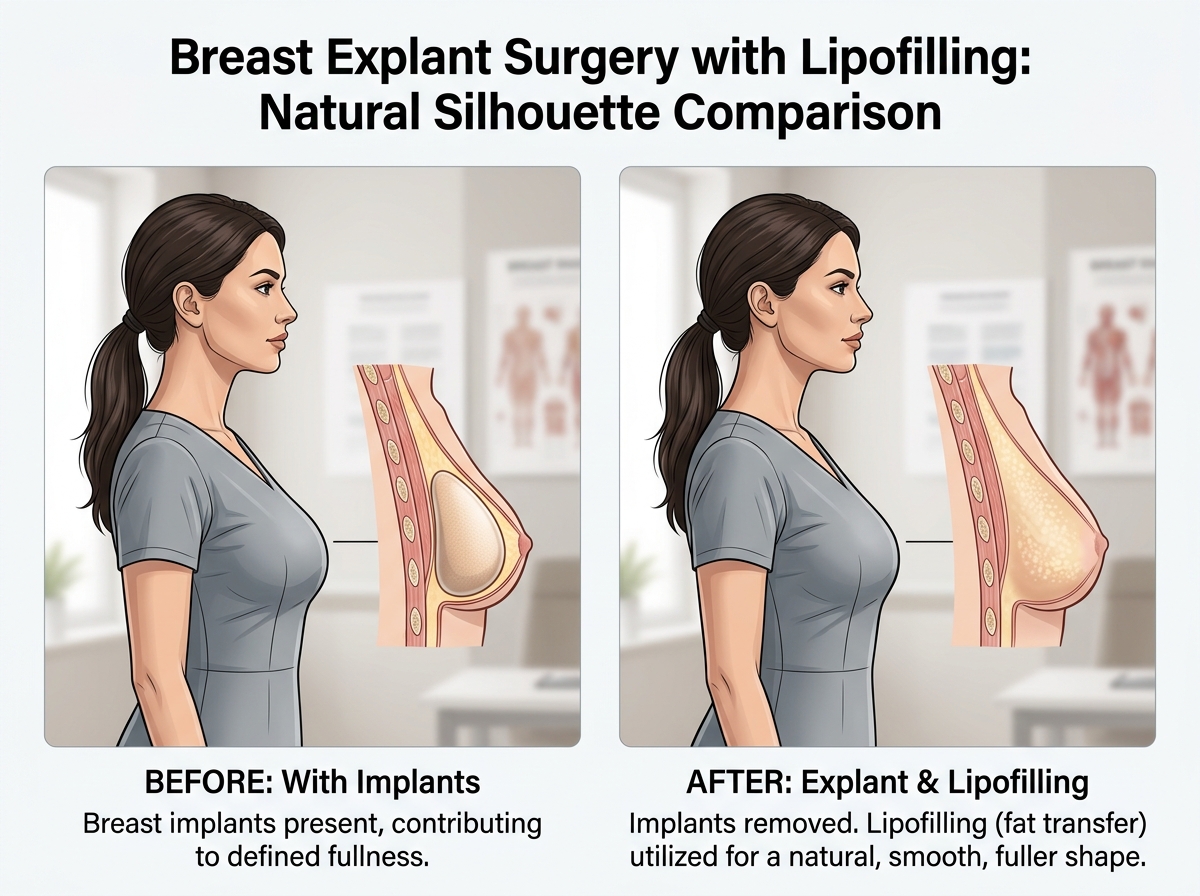
More Women Are Choosing the Breast Explant Lipofilling Combo - Here is Why
The breast explant lipofilling combo removes implants and replaces volume with your own fat in one surgery. See why patients pick it and what recovery involves.
2026-04-23
Why Patients Travel to Beverly Hills for Breast Fat Transfer — and What Sets Aura Aesthetica Apart
Beverly Hills breast fat transfer patients fly in nationwide. See what sets Aura Aesthetica's implant-free specialty apart from other Beverly Hills practices.

2026-04-23
Fat Transfer Breast Augmentation vs BBL: Which Procedure Is Right for You?
Fat transfer breast augmentation vs BBL — same technique, different goals and risks. See a surgeon's breakdown to help you decide which procedure fits.

2026-04-22
Fat Transfer vs Breast Implants: Which Is Right for You?
Fat transfer vs breast implants — which is right for you? See how size, feel, recovery, and long-term risk compare from an implant-free surgical specialist.