Alloclae and Donor Fat Breast Augmentation: The Next Generation of Natural Enhancement
Updated May 2026
Patients researching fat transfer breast augmentation in Beverly Hills can use this guide as background and then review our comprehensive surgical page for candidacy, safety, and consultation planning.
A New Frontier in Natural Breast Augmentation
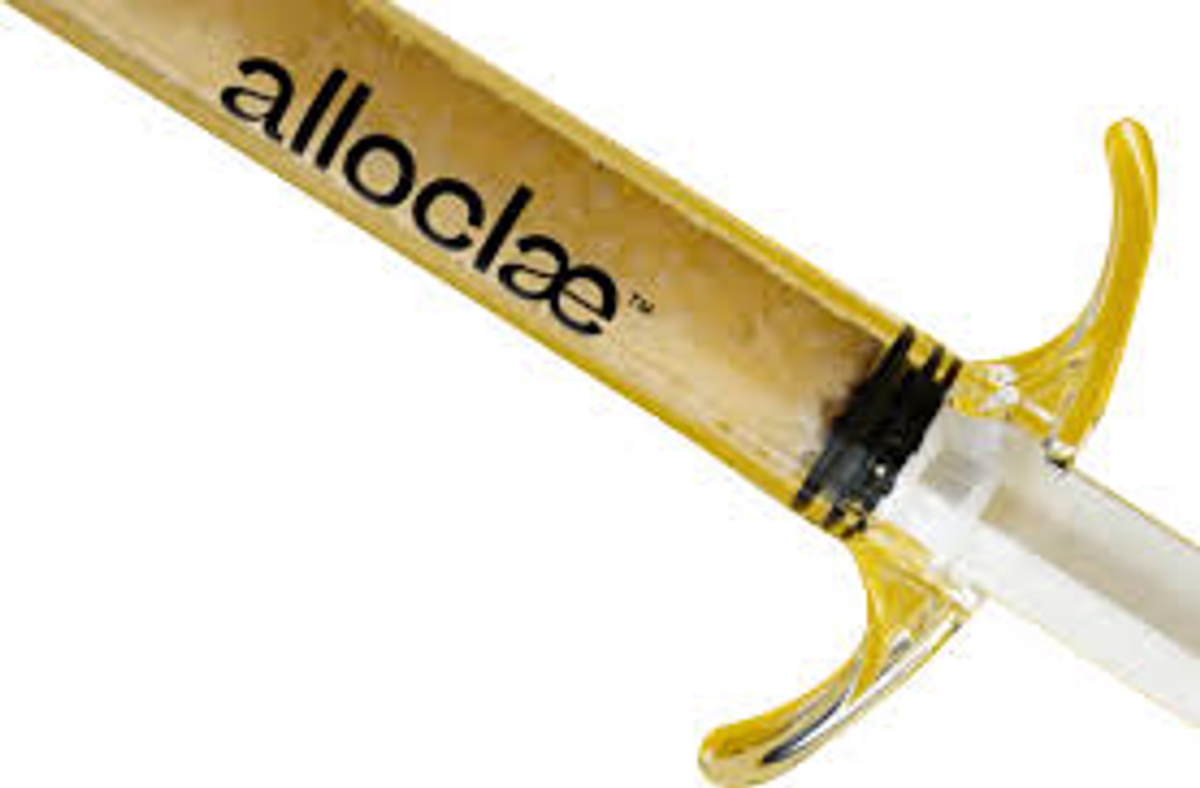
For decades, fat transfer breast augmentation has had one fundamental limitation: the patient needs enough of their own fat. Thin patients, athletic patients, and patients with limited donor reserves have often been told they are not candidates — that fat transfer simply isn't an option for their body type. A new category of biologic material is changing that calculation. Processed donor adipose tissue, sometimes called allograft fat or by its brand name Alloclae, is opening natural breast augmentation to a wider range of patients than ever before.
This is genuinely new territory. The technology has moved from research to clinical availability over the past few years, and only a small number of plastic surgeons currently work with it. At Aura Aesthetica in Beverly Hills, Dr. Jonathan Kanevsky has integrated donor fat grafting into his practice for selected patients — particularly those who would otherwise have to choose between traditional implants and forgoing breast enhancement entirely. This guide is designed for patients who have heard about cadaver fat, donor adipose tissue, or Alloclae and want to understand what this option actually offers.
What Donor Fat Actually Is
Donor adipose tissue is exactly what it sounds like: fat tissue derived from a deceased human donor, processed and prepared for use as a graft material in living patients. The same tissue donation infrastructure that has made organ transplants, bone grafts, and skin grafts possible for decades has expanded to include processed adipose tissue. Donors give consent through standard tissue donation programs, and their tissue is screened, processed, and made available to surgeons through licensed tissue banks under FDA oversight.
The patient's body does not reject donor adipose tissue the way it would reject a foreign organ, because of how the tissue is processed before grafting. The processing removes the cellular components that would trigger an immune response while preserving the structural matrix that supports new tissue growth. After grafting, the patient's own cells migrate into the donor matrix, gradually replacing the donor scaffolding with their own living tissue. The end result is biological tissue that integrates with the patient's body — not a permanent foreign material like an implant.
This is different from any other breast augmentation option currently available. It is not a synthetic filler. It is not a permanent implant. It is biological tissue that becomes part of the patient's own anatomy over time.
Why This Matters for Patients Who Have Been Told "No"
The patients who benefit most from donor fat are the ones who have always been excluded from natural breast augmentation conversations. Thin patients with minimal harvestable fat from their own bodies have historically faced a binary choice: accept implants or accept that breast augmentation isn't for them. Donor fat changes that.
For an athletic patient with low body fat percentage who wants natural breast enhancement, donor adipose tissue offers a real path forward. For a patient who has had previous fat transfer and used most of her donor reserves but wants additional volume, donor fat can supplement what's available. For a patient who has had implants removed and wants to restore breast volume but doesn't have enough of her own fat to do it alone, donor fat opens an option that didn't exist a few years ago.
The expansion of candidacy is the single most important thing this technology accomplishes. Patients who would have been turned away from natural breast augmentation entirely now have a viable option. For more on the broader candidate question, see our guide to fat transfer for thin patients.
How Alloclae and Donor Fat Grafting Works
The procedure for donor fat grafting follows a similar pattern to traditional autologous fat transfer, with key differences in the source material. The donor adipose tissue arrives at the surgical facility from a licensed tissue bank in a sterile, processed form. It has been screened for infectious disease, prepared to remove cellular components that would cause rejection, and preserved for clinical use under FDA-regulated tissue banking standards.
During surgery, the donor fat is rehydrated and prepared for grafting. If the patient has any of her own fat available — even modest amounts — that fat is harvested through standard liposuction and combined with the donor material. The surgeon then injects the combined graft into the breast using the same micro-transfer technique that produces the best outcomes in autologous fat grafting. Multiple small passes across multiple tissue layers ensure that each portion of the graft is within diffusion distance of a blood vessel, supporting integration and survival.
The technical principles that govern outcomes in autologous fat grafting apply equally to donor fat grafting. Surgeon experience with micro-transfer technique, careful processing of the graft material, and disciplined volume placement all matter. For a deeper look at why technique drives outcomes in fat grafting generally, see our guide to surgical technique and complication prevention.
The Integration Process: Donor Tissue Becomes Your Own
One of the most important things to understand about donor fat grafting is what happens to the tissue after it's placed. Unlike a breast implant, which remains foreign material indefinitely, donor adipose tissue is designed to be replaced by the patient's own cells over time. The processed donor matrix serves as a scaffold that the patient's body recognizes and integrates with. Over months following the procedure, the patient's own adipocytes, blood vessels, and connective tissue cells migrate into the donor scaffold. The original donor material is gradually replaced by living tissue from the patient herself.
The end result is biological breast tissue that came from the patient's own body but was supported and shaped by the donor matrix during integration. This is conceptually similar to how donor bone grafts work in orthopedic surgery — the donor bone provides the scaffolding while the patient's own bone cells gradually replace it. After full integration, the resulting tissue is functionally indistinguishable from the patient's own native tissue.
This integration process takes longer than traditional autologous fat grafting takes to stabilize. Final results from donor fat grafting are typically evaluated at nine to twelve months rather than the six-month timeline used for autologous fat. The slower integration is the trade-off for the dramatically expanded candidacy that donor fat enables.
Who Is a Good Candidate
Donor fat breast augmentation is appropriate for several specific patient profiles. Thin patients with minimal autologous donor fat reserves who want natural breast augmentation but have been told they don't have enough of their own fat are the most common candidates. Athletic patients with very low body fat percentages who want to maintain their training while pursuing breast enhancement fit well. Patients undergoing post-explant reconstruction who want to restore volume after implant removal but lack adequate native fat reserves represent another important category.
Patients seeking large volume increases beyond what autologous fat alone could provide may benefit from a combined approach using both their own harvested fat and donor adipose tissue. This combined approach can expand achievable volume beyond what either source alone would deliver, while maintaining the natural feel and appearance that makes fat-based augmentation appealing in the first place.
Patients who are not candidates include those with active infection at the proposed surgical site, patients with conditions that compromise tissue integration, and patients whose goals would be better served by traditional implants. As with any surgical procedure, candidacy is determined through careful evaluation rather than assumption.
The Comparison: Donor Fat vs. Implants vs. Autologous Fat
Patients evaluating donor fat naturally compare it to the other available options. Each option has distinct characteristics worth understanding.
Traditional breast implants offer predictable volume and dramatic enhancement, but they introduce foreign material that the body never integrates. Implants may need replacement over time and have associated long-term considerations including capsular contracture and implant-specific imaging requirements.
Autologous fat transfer uses the patient's own harvested fat, producing a fully natural enhancement that integrates as living tissue. The trade-off is the requirement for adequate donor fat reserves, which limits candidacy. For more on this comparison, see our fat transfer vs implants guide.
Donor fat grafting falls between these two options. It offers the natural integration and tissue-based outcome of autologous fat — the body integrates the donor material and replaces it with the patient's own cells — without requiring the patient to have adequate donor reserves of her own. The trade-off is a longer integration timeline, somewhat less established outcome data than autologous fat (because the technique is newer), and a different clinical experience than either traditional alternative.
For patients whose first choice would be autologous fat but who don't have enough of their own to make it work, donor fat offers a genuine path to the result they wanted in the first place. For patients comparing donor fat to implants directly, the choice often comes down to whether the patient prefers an integration-based approach with biological tissue or a foreign-material approach with predictable volume.
The Hybrid Approach: Combining Patient and Donor Fat
One of the most promising applications of donor fat is combining it with whatever autologous fat the patient does have available. Even thin patients typically have some harvestable fat across their body — abdomen, flanks, thighs, lower back — even if no single donor site has bulk volume. Combining a modest autologous harvest with donor adipose tissue produces a hybrid graft that benefits from both sources.
The patient's own cells in the autologous portion contribute to the integration of the donor material, accelerating the process by which donor scaffolding is replaced by native tissue. The donor portion provides the volume that the patient's own reserves alone could not deliver. The combination expands what's achievable in a way that neither source alone could match.
This hybrid approach is genuinely novel territory. The clinical results, while early, suggest that combining sources may produce outcomes superior to either source alone. For patients whose situation falls in this category, it offers a path that didn't exist a few years ago. For more on related hybrid approaches, see our guide to hybrid breast augmentation combining fat and implants.
Realistic Expectations
Patients considering donor fat breast augmentation should arrive with realistic expectations about what the technology can deliver. The procedure produces natural breast enhancement of comparable magnitude to autologous fat grafting — typically one to one and a half cup sizes per session. The aesthetic result is similar to autologous fat: a softer, more natural enhancement that looks like a fuller version of the patient's own anatomy rather than an obvious augmentation.
The recovery experience is similar to autologous fat grafting in the first weeks. The integration timeline runs longer — final results are typically evaluated at nine to twelve months rather than six. Throughout the integration period, the breast continues to mature and refine as the patient's own tissue replaces the donor scaffold. Patients should not evaluate their final outcome until at least nine months post-procedure.
Volume retention with donor fat is comparable to autologous fat retention — published data and clinical experience suggest similar percentages of the grafted material survive and integrate, though more long-term outcome data continues to be gathered as this technology matures. For context on autologous fat retention rates and the underlying biology, see our guide to fat reabsorption and graft survival.
Addressing the "Cadaver Fat" Question Directly
Many patients researching this option encounter the term "cadaver fat" and find it unsettling. The concern is understandable, and it deserves a direct response. Donor adipose tissue comes from the same tissue donation infrastructure that provides bone grafts, skin grafts, heart valves, corneas, and many other materials used in modern medicine. Tissue donors give consent through established programs, donations are screened and processed under strict FDA oversight, and the resulting materials have been used safely in millions of medical procedures.
The processing that donor adipose tissue undergoes removes the cellular components that would identify the tissue as foreign and trigger rejection. What remains is the structural matrix — the framework that supported the original tissue. This framework serves as scaffolding that the patient's own body recognizes and integrates with. Over time, the patient's own cells replace the donor scaffold entirely.
The result is not "cadaver fat" in any meaningful sense after integration. It is the patient's own living tissue, supported during the integration process by donor-derived scaffolding that gradually disappears. Patients who initially find the concept uncomfortable often find that understanding the process changes their perspective. The technology represents a thoughtful application of medical science to a problem that has long limited what natural breast augmentation could offer.
Safety, Regulation, and Quality Control
Donor adipose tissue is regulated by the FDA under the same framework that governs other human cellular and tissue-based products. Tissue banks providing this material must meet rigorous screening, processing, and quality control standards. Donor screening includes infectious disease testing, medical history review, and behavioral risk assessment. The processing eliminates pathogens and removes immunogenic components. The final material is sterile and safe for clinical use.
The regulatory infrastructure surrounding human tissue products is well-established. Bone grafts, skin grafts, and other tissue-derived materials have been used in medicine for decades under similar oversight. The extension of this infrastructure to processed adipose tissue applies the same standards and quality controls to a new category of clinical material.
Patients considering donor fat grafting should confirm that their surgeon sources material from a licensed tissue bank under FDA oversight. They should ask about the specific processing methods used and the safety record of the source material. A surgeon offering this procedure should be able to discuss the regulatory framework and safety considerations directly and confidently.
Why Aura Aesthetica Offers This Option
At Aura Aesthetica, donor fat grafting is offered for selected patients because it expands what natural breast augmentation can deliver. Dr. Kanevsky's broader practice philosophy is built around offering patients the procedures that genuinely match their goals and anatomy, even when those procedures are newer or less commonly available than traditional alternatives. For patients whose situations are not well-served by autologous fat alone or by traditional implants, donor fat opens a path that respects their preferences and their body.
The integration of donor fat into the practice is approached with the same technical rigor that governs autologous fat work. Sourcing comes from licensed tissue banks under FDA oversight. Surgical technique applies the same micro-transfer principles that drive outcomes in autologous fat grafting. Patient selection is careful and honest — donor fat is recommended when it's the right answer for the patient's specific case, not as a default for every patient who asks about alternatives to implants.
For more on the practice's general approach to natural breast augmentation, see our overview of why patients choose Aura Aesthetica and our complete fat transfer breast augmentation guide.
The Consultation Conversation
For patients interested in donor fat breast augmentation, the right next step is a consultation that covers your specific situation, your goals, and an honest evaluation of which approach — autologous fat, donor fat, hybrid, traditional implants, or hybrid implant-and-fat augmentation — would best produce the result you want. The consultation should include detailed evaluation of your own donor fat reserves, discussion of your aesthetic preferences and tolerance for different recovery timelines, and a clear explanation of how donor fat grafting would work in your specific case.
Patients who proceed with donor fat grafting at Aura Aesthetica receive the same comprehensive surgical planning that defines the practice's autologous work — careful evaluation, honest expectations setting, refined surgical technique, and thoughtful post-operative care. The result is a procedure that takes advantage of an emerging technology while applying the foundational principles that produce excellent outcomes in any fat-based breast augmentation.
The Bottom Line: A Genuinely New Option
Donor fat breast augmentation, including procedures using Alloclae and similar processed adipose tissue products, represents a genuine expansion of what natural breast augmentation can offer. For patients who would otherwise choose between traditional implants and forgoing enhancement entirely, this option opens a third path. The technology is newer than autologous fat grafting and the long-term outcome literature continues to mature, but the early clinical experience is encouraging and the underlying biology — donor scaffolding gradually replaced by the patient's own living tissue — has been validated in many other tissue grafting contexts.
For the right patient, donor fat grafting offers something that simply wasn't available a few years ago: natural breast augmentation that doesn't depend on the patient having enough of her own fat to harvest. That is a meaningful advance, and it deserves serious consideration from patients whose situations make traditional autologous fat impractical. Patients who want to evaluate whether donor fat fits their situation can book a consultation with Dr. Kanevsky to discuss candidacy and what the procedure could realistically deliver.
Keep Reading
Explore the foundational procedure in our complete fat transfer breast augmentation guide, learn about candidacy considerations in our guide for thin patients, or see how donor fat compares to other options in our fat transfer vs implants comparison and hybrid breast augmentation guide.
Medically reviewed content
Reviewed by Dr. Jonathan Kanevsky
This educational article was reviewed by Dr. Jonathan Kanevsky, a board-certified plastic surgeon in Beverly Hills specializing in fat transfer procedures, body contouring, breast surgery, and recovery-focused aesthetic planning.
Last updated: May 2026
Related articles
Continue reading: Fat Transfer Breast Augmentation
2026-04-29
Fat Transfer Breast Augmentation Guide 2026 | Beverly Hills
Complete Beverly Hills guide to fat transfer breast augmentation: candidacy, cost, recovery, risks, results, fat survival, and how to choose a specialist.

2026-04-22
What Is Fat Transfer Breast Augmentation? Patient Education Guide
What is fat transfer breast augmentation? Your own fat is harvested, purified, and injected to grow breast volume naturally — no implants. See the basics here.

2026-04-22
Fat Transfer vs Breast Implants: Which Is Right for You?
Fat transfer vs breast implants — which is right for you? See how size, feel, recovery, and long-term risk compare from an implant-free surgical specialist.

2026-04-22
How Long Do Fat Transfer Breast Augmentation Results Last?
How long do fat transfer breast augmentation results last? See why surviving fat is permanent, what affects it, and how the 60-70% retention rate is calculated.
Related reading
Explore next steps for breast fat grafting
- fat transfer breast augmentation Beverly Hills
- breast fat grafting Beverly Hills
- fat grafting breast augmentation
- natural breast augmentation
- breast augmentation with fat transfer
- Beverly Hills cost planning
- Recovery milestones after fat transfer to the breasts
Ready for individualized recommendations? Request your consultation for a personalized treatment plan.