The future of breast implants
Updated May 2026
The Future of Breast Implants
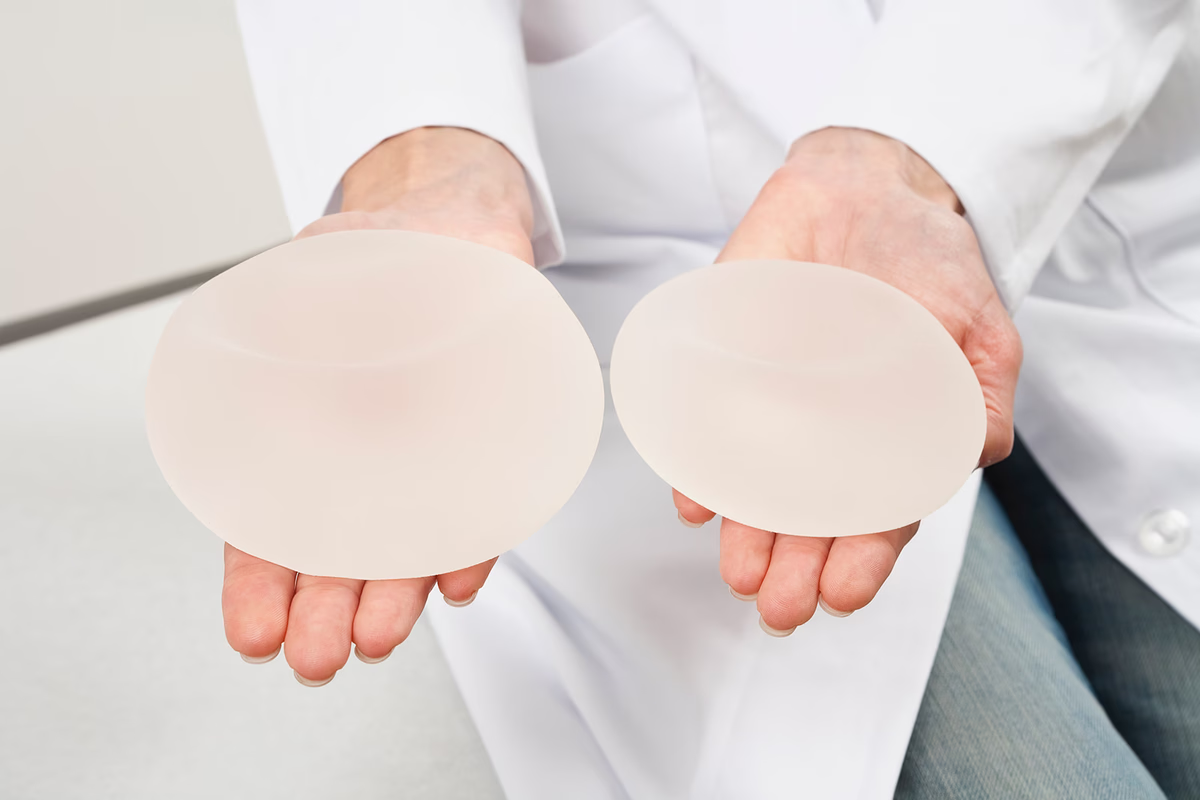
Breast implants have been controversial for decades, with proponents and opponents weighing in on their safety and efficacy. In this blog post, we will explore the history of breast implants, their health risks and controversies, including BIA-ALCL and breast implant disease, and the alternatives available.
The History of Breast Implants
Breast implants have been around for over 100 years, with the first breast augmentation operation in 1895. However, it was not until the 1960s that breast implants began to gain in popularity. In the early 1960s, the first silicone breast implants were developed, and by the late 1960s, they were widely used in breast augmentation operations. The use of silicone breast implants was banned in the USA in 1992 following concerns about safety. In 2006, the FDA again approved silicone breast implants use, provided they met specific safety standards.
BIA-ALCL and Breast Implant Illness
BIA-ALCL, or breast implant-associated anaplastic large-cell lymphoma, is a rare type of non-Hodgkin lymphoma that has been associated with breast implants. According to the FDA, 573 cases of BIA-ALCL have been confirmed worldwide, and 17 deaths have been reported. The risk of developing BIA-ALCL is low, with an estimated incidence of 1 in 500,000 and 1 in 1,000,000.
In addition to BIA-ALCL, there is growing concern about the possibility of breast implants causing autoimmune problems, also known as breast implant disease. Symptoms can include fatigue, muscle and joint pain, hair loss and skin rashes.
Alternatives to Breast Implants
- Fat transfer: Fat transfer involves using fat from another part of the body, such as the abdomen or thighs, to increase the size of the breasts. This procedure carries fewer risks of complications than breast implants.
- Breast lift: A breast lift, or mastopexy, involves removing excess skin and tightening the remaining skin to lift and reshape the breasts.
- Natural breast augmentation: Natural breast augmentation involves using herbs, supplements and other natural remedies to increase breast size.
The Future of Breast Implants
Breast implants will likely remain a popular option for women seeking breast augmentation, despite the potential risks and controversies surrounding them. As research into the potential health risks progresses, new safety guidelines or regulations may be implemented. The continued development of alternatives to breast implants, such as fat transfer, could offer women more options with a lower risk of complications.
For more information on breast implants, please schedule a consultation with Dr. Jonathan Kanevsky at his Beverly Hills plastic surgery clinic. To book, call 310-773-4596.
Medically reviewed content
Reviewed by Dr. Jonathan Kanevsky
This educational article was reviewed by Dr. Jonathan Kanevsky, a board-certified plastic surgeon in Beverly Hills specializing in fat transfer procedures, body contouring, breast surgery, and recovery-focused aesthetic planning.
Last updated: May 2026
Related articles
Continue reading: Fat Transfer Breast Augmentation

2026-04-22
Fat Transfer vs Breast Implants: Which Is Right for You?
Fat transfer vs breast implants — which is right for you? See how size, feel, recovery, and long-term risk compare from an implant-free surgical specialist.
2026-04-29
Fat Transfer Breast Augmentation Guide 2026 | Beverly Hills
Complete Beverly Hills guide to fat transfer breast augmentation: candidacy, cost, recovery, risks, results, fat survival, and how to choose a specialist.

2026-04-22
What Is Fat Transfer Breast Augmentation? Patient Education Guide
What is fat transfer breast augmentation? Your own fat is harvested, purified, and injected to grow breast volume naturally — no implants. See the basics here.

2026-04-22
How Long Do Fat Transfer Breast Augmentation Results Last?
How long do fat transfer breast augmentation results last? See why surviving fat is permanent, what affects it, and how the 60-70% retention rate is calculated.